

Could *intensive parenting* be a subconscious form of... stress management?
The science behind a "shared nervous system"

“As I see it, this malleability of the “intensive parenting” label suggests a logical, practical and even moral emptiness — one that ultimately does harm to parents. Or maybe I am just saying that because, according to some of these truly all-over-the-place metrics, I just might be an intensive parent and feeling defensive.” — Elissa Strauss in “I Think I Might Be an ‘Intensive Parent’…”
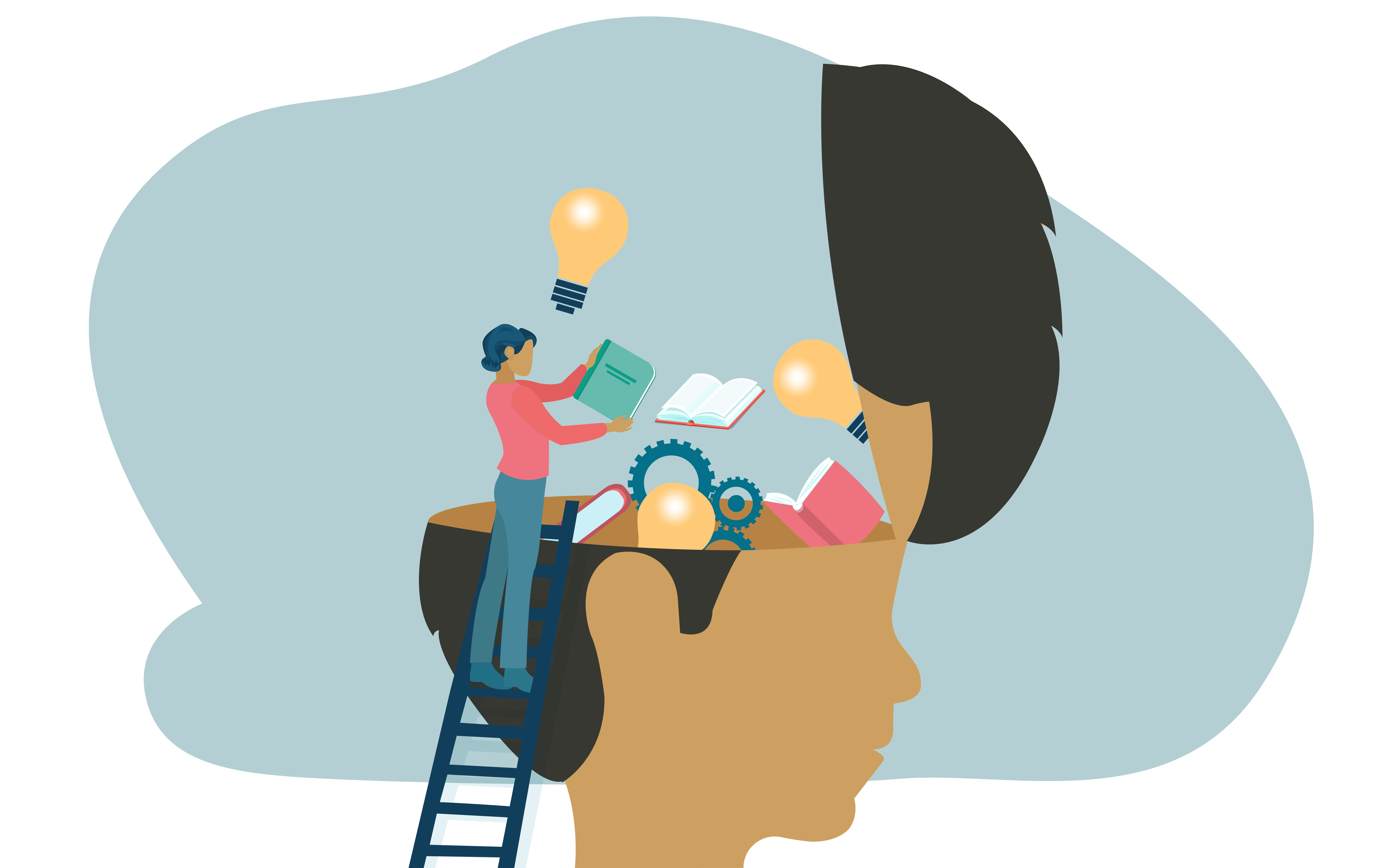
When the Surgeon General issued an advisory on parental stress in 2024, one “solution” to the crisis (offered in various ways across various think pieces) seemed to revolve around a similar theme: “maybe parents should just stop being so intensive?” As if the stress of modern parenting comes down to a simple parenting style choice.
In the NYTimes, Claire Cain Miller tackled this perspective in a way that, to be completely honest, kind of bugged me at first. Claiming: “today’s parents face something different and more demanding: the expectation that they spend ever more time and money educating and enriching their children,” Her reporting seemed to boil down to: maybe we should all just chill out. Not a fair assessment (by me) especially given her great follow-up on The Daily1 where she had more time to dig into why modern parents are, in many ways, forced into intensive parenting.
Personally, I have a conflicted relationship with the phrase and the framing of intensive parenting. I do not want to be in the category of intensive parent but I often catch myself doing things that feel intensive. Almost like I’m baited into becoming the helicopter, the bulldozer, the snowplow, the micromanager, the [insert intensive parenting buzzword here]. So it was refreshing to read Elissa Strauss’ conflict with the phrase and framing too — brilliantly picking apart the term and analyzing her own degree of intensity:

As I started wrestling with the ways this phrase invades my own life and the role that such intensity may play in parenting stress load more broadly, another perspective popped up that flipped my brain a little inside out. A few months ago, in conversation with a friend who was going through a difficult and complex parenting experience, she punctuated a sentence with: “we share a nervous system.” For her, it was a simplified explanation that captured how she felt mentally and physically affected by all of it, effectively saying: his sadness is my sadness, his pain is my pain, his stress is my stress.
Normally, my smug physiologist side would question the biological validity of such a comment (with outward expression suppressed by my supportive friend side). But then I started thinking about how “sharing a nervous system” could, in fact, be a real thing, a downstream recognition of a challenging situation tapping into our stress pathways, winding its way through the checkpoints related to how our human brain perceives and processes and responds to external stressors. Could the emotional state of our loved ones (especially our children) play into our physiological response to the unpredictable and uncontrollable world of parenting? Could we be physically responding to the potential stressors our children encounter or could encounter in the future?
Is empathic stress a thing?2
Apparently, yes. Turns out, there is an emerging field of research dedicated to this source of psychosocial stress.
“When they’re sad, I’m sad.”
The field of empathic stress is quite young in the grand landscape of stress research. From a 2025 review comparing methodology employed in empathic stress research, only 17 studies were included across the last 15 years.
Studying empathic stress involves acutely stressing a “target” subject and then measuring the effect on the “observer” subject. There are two key designations for types of empathic stress, based on how an observer responds: resonance vs. vicarious stress. Resonance stress relates to the way an observer shares the target’s responding state – e.g. when the target responds to a stressor with an elevation in heart rate, the observer also has an elevation in heart rate even though they are not directly exposed to the stressor. Vicarious stress is when the observer responds to the target’s exposure to a stressor but their response is completely independent of whether or how the target responds. Instead, as described by the authors of the review paper, vicarious stress “seems to be a projection of the observer’s own perspective and appraisals onto the stressful situation”. E.g. The target’s potential stressor may be public speaking, which they may or may not physically respond to with an elevated heart rate; but the observer, watching the target give the public talk, does respond to that stressor with an elevated heart rate (even though it’s not them getting up to speak).
In the few studies that look at parent<>child dyad (well, let’s be honest, its mother<>child dyad3), the biggest effects are related to resonance stress. Stress a baby and their elevation in heart rate corresponds to the mother’s elevation in heart rate.
Research has yet to document solid evidence for vicarious stress in parent<>child relationships. However, even the authors of the review paper admit the limitations in catching this metric. Most of the research, so far, has focused on mother<>infant dyads. The stressors you can expose an infant to are (rightfully) very mild – e.g. a little arm restraint. Point being (and problematic for truly studying vicarious stress), you can’t subject an infant to a stressor that an adult would find stressful. And when studying vicarious stress, it’s not that your child is stressed, it’s your interpretation of whether or not your child could be stressed based on whether or not you find the challenge they are facing to be stressful. Restraining an arm is not stressful for an adult.
With that said (and hopefully research will dig into this at some point), I can think of a whole range of stressors related to parenting that could cause vicarious stress4. Well-studied human stressors — e.g. financial strain, social conflict, job insecurity, health challenges — are not the same as an infant arm restraint. The way we project these potential stressors onto the map of our children’s lives via our roles as parents may show up as anticipatory stress — the worry that comes with the pressure to prepare them for their future. Again, vicarious stress is not a response to our child’s stress response, it’s our response to their exposure to a stressor or potential stressor that they are facing or could face. This means that vicarious stress is wrapped up in our own assessment of the situation, our own memories, our own context, our own stressor map. Not theirs.5
Could some degree of helicopter/bulldozer/snowplow/intensive parenting be considered a coping mechanism for empathic stress? A way of reducing our kids’ stress exposure to limit the effect that stress resonance has on us? A path to cut off anticipatory vicarious stress that comes with raising kids in today’s world? What if this drive is heightened when caring for kids who are complex, intense, neurodivergent, or more emotionally reactive? How much of the related path-clearing/micromanaging/curating are we doing for our own bodies? How much of that impulse to limit the potential stressors our children face (or may face) is really about reducing our own (imagined) future stress load?
How much of our “intensive parenting” is actually a subconscious form of stress management?
In this context, the simplest behaviors that could be construed as over-the-top6 intensive parenting – over-involvement in activities, enrichment, school, social interactions – may relate to the way we are projecting and protecting them based on how we feel our child will feel. In the moment or at any point in their future. For example, consider all the ways parents become “intensive” when it comes to college.
I’m not writing this to support or criticize the various ways intensive parenting shows up in society today, I’m simply pointing out that there is truth to the statement, “we share a nervous system”, and trying to understand where that actually leads us, as parents.
For me, the next logical step is considering how all of this plays into the emotional labor, especially the emotional labor that can show up as intensive parenting. After all, another way of cutting off how we perceive and internalize the stress of others is to manage emotions. Our emotions and their emotions. If the stress of others causes us stress, why not try to diminish the source?
Here comes emotional labor…
Emotional labor is the work we do to manage feelings – our own feelings and the feelings of others. Emotional labor coats many cognitive labor tasks and adds up to mental load, as described by Dr. Leah Ruppanner and colleagues in a 2022 review:
“For example, mothers of young children often make mental lists of children’s day-to-day routines or activities, which at face value is just cognitive labor. This evolves into a mental ‘load’ when the mother is at work thinking not only about the routines and activities, but also about the experiences of their child in these routines and activities, which is emotional labor too because they are worried about their child even in their absence…. This combination of cognitive and emotional labor forms a load as it is tied to the emotional experiences of the family.” – Dean, Churchill, and Ruppanner 2022
In this explanation, it’s the worrying about experiences that jumps out at me.
In my evaluation of how intensive parenting shows up in my life, the things I consider too “intensive” directly relate to the ways I overthink (and attempt to curate) the childhood experience, including activities and friends and school and family.
A similar self-awareness came out in Elissa’s piece:
“Pulling from the wide-ranging taxonomy of intensive parenting styles, I am most guilty of deep emotional investment with my kids and being a hyper-scheduler. By emotional investment, I mean I am very aware of their moods, am interested in their personal lives, think about obstacles they may face and do some behind-the-scenes trouble-shooting for them.” — Elissa Strauss
Sure, letting our kids be disappointed, letting them run up against obstacles, experience sadness and frustration and distress, is a key part of development. Growth mindset blah blah blah. But getting through it, as the human who also feels their sadness and absorbs their stress, is really fucking hard. It is so much easier to bulldoze and clear the way. Is this a subconscious coping strategy?
Apologies for my sample-size-of-me example, but here is the point where I acknowledge that I am a lopsided intensive parent. I exert more intensity towards one of my children, more actively curating and planning around her moods and emotions. I do not do this to the same degree for my other kid. This has nothing to do with picking favorites (although, ironically, my “intensively parented” child will claim that I prefer her sister) and more to do with differences in temperament.
I have two very different children in my house. One with big emotions and strong reactions, the other who doesn’t seem to give a shit and lets a lot of things roll off her back. One who is more “intense” and one who is less7. One orchid and one dandelion. So many things in parenting are just easier with the latter8. I don’t have to project and plan for big emotional reactions or how an event or activity or social engagement will dramatically impact her mood (and, therefore, mine). For my dandelion kid, I can fully practice letting go, letting her lead the way, letting her figure it out. For my orchid kid, I am right there with Elissa’s “deep emotional investment” and have to actively hold back my compulsion to inject myself into every little detail, curate every experience and/or bulldoze through the hard shit for her. It’s easier (for me!) if I clear the path and cut the emotions off at the pass. It’s harder (for me!) to ride the wave of whatever emotion/mood may come. It is unpredictable and it is stressful (for me!).
Is this a me thing? Or is this a mom thing? Or maybe I should ask: “why is this a mom thing?”
It is often assumed that women are naturally more empathic than men. But justifying a biological basis for a sex difference in empathy tends to fall apart under scientific scrutiny and any observable differences likely relate more to gender socialization (and biased research) than anything else. With that said, I do think there are structural and social systems at play that drive a different degree of maternal emotional connectedness. And that degree of emotional connectedness may power the impulse to take on more emotional labor.9
Back to the question above: how much of the emotional labor showing up as “intensive parenting” is actually a way of managing the stress of parenthood?
The emotional labor of motherhood can (in theory) give a sense of control to keep the stress-inducing lack of control feelings at bay; emotional labor can (in theory) reduce our kids’ exposure to stressors and, therefore, reduce our exposure to empathic stress.
While I’m all for limiting parental stress (obviously), I am not advocating for bulldozer intensive parenting. I actually don’t think it’s healthy to intercept key developmental opportunities for our kids10. With that said, I do think we can acknowledge that “intensive parenting” may represent a deeper internal battle and there might be something more to why we – mostly women and mostly mothers – take on emotional labor.
In this context, it’s important to consider what empathic stress, deep emotional connections to our children, and the emotional labor we take on may be doing to our bodies, especially in an increasingly stressful world.
Now the questions are: does empathic stress affect health? and do gender differences exist that could relate to differential impacts on mothers vs. fathers?11
(early data suggests) Yes and yes.
“Whose Stress is Making Me Sick?”
In an earlier discussion on mental load, Haley Swenson pointed out:
“how much of our mental load and its stress relates to how connected we see ourselves to other people? That’s when the emotional stakes feel really high.” — Haley Swenson
The degree of connectedness comes through in empathic stress research. We do not respond to the stress of strangers quite like the way we respond to the stress of loved ones. These findings tend towards being gender neutral (although, again, not yet studied in father<>child dyads when it comes to parenting) but there is another area of stress research that has started to show gender differences, especially in the context of stress-related health outcomes: the study of network stress.
Network stress also relates to the stress of others but instead of measuring the observer’s response to subjecting a target individual to an acute stressor (empathic stress), the research on network stress compares an individual’s reaction to the stress affecting those in their network to the impacts of similar stressors in the context of self-stress. For example, while self-stress may relate to you losing your job and experiencing financial instability, network stress relates to your child/close friend/relative/community member losing their job and experiencing financial instability.
I first heard the term network stress while listening to Dr. Tené Lewis explain her research on the podcast, The Stress Puzzle. In one study, her team quantified how network stress affects indicators of cardiovascular health by measuring blood pressure at different times of day alongside surveys to capture and differentiate self-stress events from network stress events. They found that while network stress had a significant impact on female participants, male participants were (statistically) unaffected.
Moreover, for women, network stress was even more potent than self-stress. As Lewis explained: “it’s not so much about the individual, but about the context. I hypothesized right that network stressors would have a bigger impact. I didn’t realize that that would be the sole impact.”
Lewis’ research expanded on the work of her doctoral advisor, Dr. Sheryl Woods-Giscombé, whose paper titled “Whose Stress is Making Me Sick?” explored the ways chronic network stress feeds stress-related, racial health disparities in a gendered way.12
As Lewis explained, network stress may be even more complex as a stressor because of how it affects our perception of control:
“To what extent do you ruminate more when it’s a network stressor versus something that’s happened to you, to what extent are there a cascade of other things that you are dealing with when it’s something that’s happened to a child or a loved one? Does it impact your sleep because you’re ruminating or because you’re less in control or feel less in control?” — Dr. Tené Lewis
A few key words here. Rumination. Worry. Cascading concerns. This came up in the context of mental load plate-spinning vs. box-checking:

ok, back to your usually scheduled program…
Why would network stress affect women more/only?
The first clear definition on network stress came out of a 1984 paper by Drs. Ronald Kessler and Jane McLeod. In their paper titled Sex Differences in Vulnerability to Undesirable Life Events, Kessler and McLeod point to evidence that “role-related stress and resources are responsible for the higher levels of distress among women than men.”
When reporting their study, the authors spend a good part of the introduction shutting down historically sexist science that focused on female fragility and women’s inability to cope as the underlying cause of “higher levels of distress” (it was 1984, after all). They then looked to research parsing out how men and women classify and respond to stressful life events. While women and men both report an equal number of stress events that affect them, personally, the differences surface because women report more life events that affect those in their network on top of their personal stress events. These network stress events were reported as “very distressing” for the women but rarely mentioned by the men in the same study. Kessler and McLeod set up their study in a way to demonstrate the following: women are not more vulnerable than men to the emotional effects of negative life events; however, network life events affect the “aggregate vulnerability” for women.
Women are not emotionally fragile when it comes to network stress events, they are just overexposed to the stress of others in their network.
In addition, as the researchers demonstrate, the differences do not reflect women’s inability to cope with such stress. Instead, women take on a bulk of the supporter role in their network, and it is that role amplifying the way they internalize the stress of others in a nuanced way:
“The time and energy demands placed on a supporter are likely to lead to distress when they come on top of an already demanding set of role responsibilities. This pressure is likely to be exacerbated by a personal style that promotes emotional involvement and subordination of personal needs to the needs of others.” – Kessler and McLeod, 1984
That description sounds a lot like motherhood to me. At least the societal expectations of “good” motherhood.
From the research available, men do not physically respond to network stress in the ways that women do. Men are not getting sick from the stress of others in the ways that women are. If the impacts of network stress relate to the degree of the supporter role13 someone takes on (in their family and community), which often reflects differences in socialization and gender norms and cultural pressures on boys vs girls, men vs women, moms vs dads, then the stressor map takes on an even more gendered lens14. There may be a heavier overlay to consider when the map not only reflects our self-stress but also the ways we, as women, internalize the stressors affecting those we love.
Back to intensive parenting…
I often think about the inevitable stressors of the parenting journey. The things we cannot avoid because they are simply a part of loving and caring for another human, mixed with the reality of the world we live in today.
Bubble-wrapping our children with intensive oversight is not necessarily the healthy path (for us or them!) but the alternative is accepting that our kids will encounter challenges that will cause us stress. Or maybe there is a middle ground in there somewhere?
Stress load is cumulative. Chipping away at elements contributing to the load is valuable. We may not be able to avoid empathic stress or network stress so we need to factor it into a productive stress-reducing equation. At a partnership level, understanding that there may be a disproportionate burden on the more emotionally connected parent should open up a new angle for conversation around true balance in the home/partnership, shifting whose time is prioritized for accessing stress buffers, shifting the support for other potentially stressful circumstances. Considering stress reducing opportunities hidden in the mental load, a starting point could be assessing who, in a household, takes on more emotional labor and, therefore, the heavier and more stress-inducing side of cognitive labor. Any discussions around mental load distribution and balance should factor in that additional weight.
The easy-out of the “maybe you should just do less/worry less/take on less” is not a productive solution to counteract the impulse to do more/worry more/take on more when that impulse reflects a need to guard yourself from potential kid stress. We can acknowledge that, yes, intensive parenting may be causing unnecessary parental stress AND respect that it may reflect a parent’s outlet to quiet inevitable stressors.
Every family and every person and every challenge is different, of course, so maybe this is also a note about having compassion for those around us parenting in whatever way they feel compelled to parent. And a reminder to give ourselves a little bit of grace while navigating these unpredictable waters.
As always, the Maternal Stress Project is never pay-walled. But every gesture of support helps to keep this going as a passion project. Passing this along to one friend or use this link for a “paid” version that is $6 for the entire year… which, in 2026, is basically the price of one espresso-based beverage.
Even if you just listen to the first five minutes, I love the way Claire Cain Miller chuckles when she says "little kids, little problems" to Michael Barbaro when he kind of dismisses her parenting stress because she has older children than he has.
To be completely honest, I first wrote down that question without even realizing empathic stress was a thing. It seemed like the best phrase to use for what I was interested in writing about and I thought I had just made it up. I’m glad I didn’t and that there are real human stress researchers interested in this 😅
As far as I can tell, the parent+child dyad studies are almost exclusively mother<>child dyads. So, either researchers are starting from the assumption that the empathic parent = mother (and therefore biased with expectations for which parent is most affected by empathic stress) OR they just didn’t get enough dads to sign up to participate in the study (which is also an issue I have heard from researchers).
To my knowledge, this entire area is still unexplored. Or let me know what I missed!
This is another layer of individuality to consider when it comes to the stressor map — if we are especially affected by financial instability, we may be more inclined to anticipate/feel the stress our children might feel in a future of financial instability. If we are especially affected by social factors, we may be more inclined to anticipate/feel the stress our children might feel in a difficult social situation.
I am struggling a little bit with the distinction between necessary intensive parenting (e.g. fighting for/against something that will demonstrably affect your child’s life now or in the future) and over-the-top intensive parenting (e.g. opportunity hoarding)
And, honestly, my husband and I have no idea where she gets it. We are not, what I would call, chill people. And, yes, she is only 12 so maybe this will change in the coming years. But I can already see how this is affecting my thinking towards very future things, like college prep intensity. I find myself not really worrying about the “getting into a favorite school” thing for but hyper-focused on how this may affect my other kid. Academically, they are pretty damn similar. So, it's not an academics thing, but it may be about managing my own stress!
highly recommend Ann Ledbetter ‘s My Kids Are Harder Than Yours series.
Wondering if we would start to see shifts in this as boys/men/fathers pick up more caregiving, Darby Saxbe?
Enter Dr. Emily Edlynn and Autonomy-Supportive Parenting!
Operating on the binary here. Apologies. The current state of research has only compared men and women as demarcated by the researchers. But the study results are likely reflective of gender identity and socialization more than anything that is specific to a biological sex so the application may be more expansive than described.
Dr. Woods-Giscombe’s work deserves WAY more space than I can offer in this post. With entire communities facing unprecedented levels of stress in America right now, the toll that it will take on the women in those communities, as pillars of support, cannot be overlooked.
The way network stress affects the health of the supporter has also been called the “cost of care”. I do worry that the phrase “cost of care” minimizes the disproportionate health impacts that relate to the way individuals (especially women) are socialized to take on supporter roles. Yes, care has a “cost”, but many elements in the “cost” relate to societal issues that unnecessarily add weight.
Maybe modern fatherhood and male caregiving could eventually shift this towards a gender-neutral convergence as this nascent research expands?
Great piece - I love how you tied together these disparate research literatures - there are so many testable hypotheses that could come out of your thinking here!
This is such an important way of naming what’s usually invisible. Thank you for writing it.