

Here's to maternal rebels.
Happy f*ckin' Mother's Day!

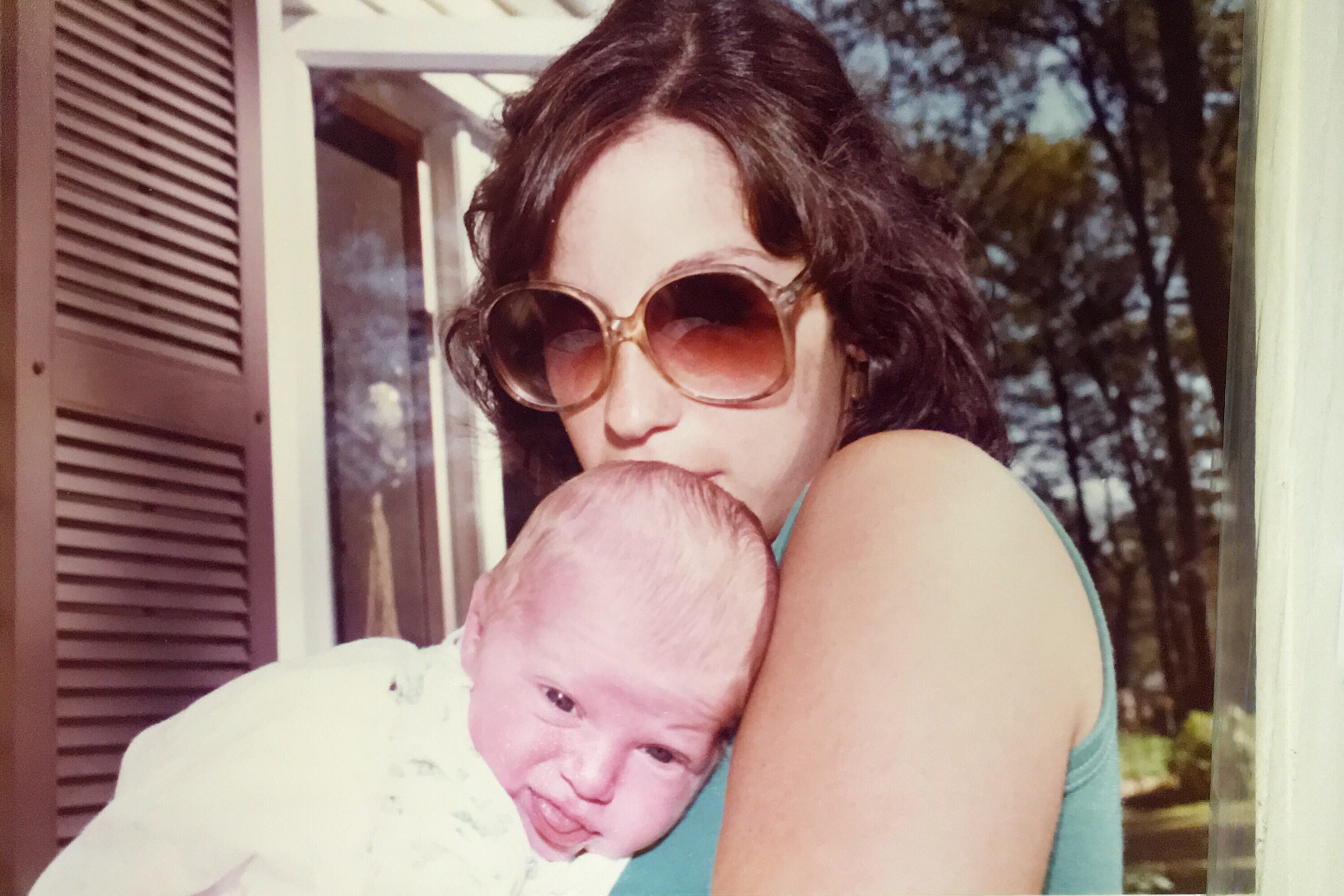
I wrote the essay below a few years back in honor of Mother’s Day and decided it was time to repost with a few edits and updates.
At the time, writing this felt like both an origin story and a hope for the future. I had recently read Dr. Claudia Goldin’s book Career & Family: Women’s Century-Long Journey Toward Equity and when Goldin described the way each generation has a leading pack breaking through the barriers of their time, I instantly recognized my paternal grandmother and my own mother. As Goldin explains, before each historical “leap” towards a more equitable future, women must face and break down a specific generational barrier. My grandmother’s generation had legal barriers that barred women, especially mothers, from going into or continuing in the workforce. My mother’s generation had cultural barriers that encouraged women to attend college for the sole purpose of scoring a husband and becoming a wife.
In the essay, I call them maternal rebels as an ode to the fact that they didn’t barrel through these barriers in order to make a statement; they just didn’t think the rules should apply to them. They said fuck it and made their own way. While they did not purposefully chart this course to be role models for the next generation, they ended up doing just that, for me at least.
For our generation, Goldin’s research predicts that a key barrier in the way of the next leap is ‘couple equity’ – an equal sharing of the time dedicated to family and career. At the heart of ‘couple equity’ is equal partnership in the home. This requires resetting how we see and VALUE time: time spent at work and time spent on care, time spent networking with colleagues and time spent planning the grocery list for the week or fitting together the puzzle work of summer camp.
I wonder if our generation of maternal rebels will be the ones who refuse to accept an imbalanced relationship. Rebels who who look for and expect partners to share the load and challenge the way we see and value time1. Additionally, we need a generation of paternal rebels to also say fuck it to gender norms and meet us in the middle.
I truly believe that this will be the healthiest path forward, for everyone, but especially for women:
Of husbands and wives…

Where is the tipping point between a partnership that relieves weight from the stressors on the map and one that adds weight? Using the purest form of the word “health”, when is a marriage truly “healthy” versus “unhealthy”?
In last week’s essay about the health effects of identity conflict and expectation mismatch in a marriage, I concluded with:
part of the problem is that we’re missing the role models for equal (and respectful/supportive) partnership. For men and women. I’ll add to this that we also need role models for women holding onto their identities outside of gender norms and finding partners who see and support all sides of them.
When I consider the impact of maternal (and paternal !) rebels, I see the importance of role models and of normalizing the path towards the next leap. What it looks like to live in contrast to societal expectations of their time. In my own story2, my maternal rebel lineage likely affected my personal standards for the man I would eventually marry and a marriage that was more about partnership than becoming someone’s wife.3
Admittedly, since first writing about my maternal rebels, I have become a wee bit less optimistic about the ease with which we will continue cruising towards an equitable future (2023 feels like a lifetime ago). With that said, I do think that Goldin’s framing is more important than ever to hold onto and all the more reason to be a rebel. Couple equity requires discussing the who does what and why in the home. Having those conversations requires open dialogue about the myriad of ways gender norms show up in daily life. Approaching that topic with curiosity and support requires a true partnership.
The more we normalize balanced partnership in the home, the more the next generation of girls and boys, men and women will come to expect this arrangement with less and less tension around it. Chip, chip, chipping away at the next great barrier to tear down. I look forward to a Mother’s Day of the future where women and mothers have full choice around who they are and who they want to be.
Ok, story time! Meet my maternal rebel lineage.
My grandmother, Isabelle, was a teacher first, a mother second.
Approaching 30 years-old when she finally walked down the aisle, some scoffed at how she married ‘late’4. But Isabelle did not give a shit. She shrugged when she explained this to me in the early days of my own marital courtship: “All the boys were away at war. Who was I supposed to marry?”
Isabelle had little patience for war-time romance.
In fact, Isabelle never planned for marriage to define her or her life. Having the “boys away” might have been a convenient excuse.
There is a streak of genius that runs through my family (not in me, but in my brother and in my uncle) with a 95% chance of originating in Isabelle’s DNA. She knew she needed to use that brain of hers. With limited career trajectories for women in the 1930’s, Isabelle went to college for a degree in teaching. Math was her specialty.
Isabelle started her teaching career in her native Rhode Island, a state that still allowed schools to fire women after getting married and strictly forbid mothers from continuing to teach once they became pregnant. After Robert Dickens convinced her that marriage would be an a-ok life path5 and she officially became Mrs. Dickens, Isabelle was promptly fired from her teaching job. Of course, this would not do. Isabelle was a teacher first, a wife second. She moved to another school and continued teaching.
Within a few years, Isabelle decided it was time to add a kid to her life. Since pregnant teachers were not allowed in the state of Rhode Island, her new school promptly fired her. Again, this would not do. After all, Isabelle was a teacher first, a mother second6. She crossed state lines and took a job at a school in Massachusetts so that she could continue teaching.
Although she checked the motherhood box with my uncle, lucky for me, Isabelle decided to have a second child, Harold, as a way to honor her recently deceased father7. Having two small children at home did not change her identity as a teacher and she continued working. My dad still casually mentions how he always had lunch at Rusty’s house during elementary school. Little Harry’s school did not have a cafeteria (pretty standard those days) and all kids had to go home at lunchtime and then come back to finish the day. Since his mom was teaching in another state, Harry went to his friend Rusty’s house and Rusty’s mom fed him lunch and sent him back to school. These are happy childhood memories for my dad. He didn’t feel like he “missed” time with his mother, and my grandmother never once expressed regret for “missing” time with her boys due to her career8.
Isabelle may have been ahead of her time but, since she was never one for labels, I will stop short of calling her a feminist. She did not continue working in order to make a statement. Isabelle was a pragmatist. Why bar capable, smart women from continuing on the career track of their choosing based on silly ideas about who women should be? In the days of 1950’s June Cleaver motherhood, Isabelle chose to ignore the societal expectations of her peer set and continued living her life in the way she wanted to live it. Hence my own descriptor for: maternal rebel (sorry for the label, grandma).
I never captured my grandfather’s perspective on all of this, but knowing Isabelle, I can only assume she would have had little patience for any outside expectations of wife and mother, especially from a husband she did not think she needed to begin with. As far as I can tell, Bob abided.9
Whether they realized it or not, Isabelle and Bob modeled a different type of partnership for my father. A partnership that gives space for a mother and wife to define her own identity outside of mother and wife. And when Linda came along with her own aspirations of a career-oriented life, Harry didn’t challenge that.
My mom, Linda, chose a career out of high school – nursing. An acceptable career for a girl/woman in the 1970’s. But this path was its own act of rebellion in her family, as she took a wholly different approach to college than her older sister who set out with aspirations of becoming a wife. My parents married young but Linda continued working. In the early days of their marriage, Linda tried on the persona of “good wife” and packed my dad’s lunch complete with a sandwich on freshly baked bread. After a few weeks (it might have been less than that), Linda realized that she hated baking bread and made my dad figure out lunch on his own. Within a couple years, Linda became a mother, and with each of three kids (me in the middle), she continued working.
Linda worked nights at the hospital when my two siblings and I were little. My dad solo-parented those evenings and we have an awesome family video of my brother as a spaghetti throwing baby making a terrible mess while all of us laughed our asses off. When my mom was off work during the day, she would often stick my baby brother and I in daycare at the local athletic club so she could play tennis. Linda understood the importance of exercise and leisure and social time; she protected it fiercely and navigated time priorities around it.
I only have happy memories from these years. Looking back, I never feel like I “missed” time with my mother when I was little. I have never heard my mother express regret for “missing” time with us. In fact, when I started my own family and sent my four-month-old off to daycare, my mom reminded me “it’s the quality of time, not quantity, that matters most.”
Whether they realized it or not, Linda modeled what it looked like to maintain her personal identity while Harry modeled what it looks like for a partner to fully support her choices around balancing work and family and other time priorities. I have no memories of my parents fighting or even arguing. As far as I can tell, her choices in life were never a point of tension.
This was the kind of partnership I came to expect. And when my serious post-college boyfriend made the side comment, “I expect my wife to stay home and take care of the kids, like my mom”, I knew I needed to run for the hills. I was just starting my PhD program, I had no idea what my life + marriage + kids would look like. But he honestly seemed to think that I was going to play the wife and mother character in his projected future. Despite the cruel things that guy said to me during our messy break up10, I did find my person11. Someone who wanted to marry Molly, not a wife, not a mother.
This is what I want for my daughters too.
In her book Career & Family, Nobel Prize winning economist, Dr. Claudia Goldin described how each generation of women face a distinct barrier that, when broken, accelerates the next generation toward a more equitable future. I see my own maternal rebel lineage: my grandmother fought through the legal barriers of her time – marriage and pregnancy bars for teachers; my mother pushed back against cultural barriers of her time – the expectation that she would go to college for her MRS degree and nothing else.
My own story is baked in privilege, of course. My two generations of maternal rebels were able to fight through barriers and couple with the right partners to enable progressive role modeling. But if we see these stories (and stories like it) as leading edge cases, can we look towards a world that is only two generations away from unlocking that hulking barrier of couple equity and equal partnership? More importantly, can we accelerate this by also fixing the systemic and structural failures that force a gendered home dynamic for so many families? (looking at you, paid leave and affordable/accessible child care).
An updated conclusion…
After writing my essay last week on how identity conflict plays into the stress of gendered partnership dynamics in the home, I kept thinking about how this shows up in relation to societal messages and forward progress towards couple equity. How we are especially lopsided right now with more women than men hitting the point of expectation mismatch in their relationships. I do think there is a “marry the right person” view to be had about marriage, especially with gender norms at play. However, I suspect it is harder to know what “right” is if you haven’t seen what “right” can be. Even if the girls have more and more role models for this (including those going solo), we also need boys to have the exposure to examples of more balanced partnerships, better division of household labor, and men stepping up their caregiving.12
This goes back to my point at the beginning – role modeling as the key barrier-breaking strategy for this generation of maternal rebels… and paternal rebels.
Perhaps the maternal rebellion in my blood is why I hold so tightly to my writing mission here. Maybe it’s one of the reasons that the slide back towards traditional views on womanhood and motherhood really drives me bananas (especially for those leveraging biological determinism to “prove” a point about what men and women should be/do). Why sometimes I want to scream: “This is unnecessary stress, people! This is not going to help our daughters have open choices to be whatever amazing human they want to be!“
Of course, not everyone needs to be a rebel13. And not everyone will be able to (safely) rebel. But there are enough of us out there to keep pushing on this tipping point.
Keep going, maternal rebels !
Happy Mother’s Day!
Can I bug you for a tiny gesture of support? A simple tap on that ❤️, a share, a recommendation, or (if you’re feeling extra generous) a ridiculously low monetary upgrade of $6 for the ENTIRE YEAR (keep me caffeinated 😉):
Maybe we should all become disciples of Laura Danger? (highly recommend her book No More Mediocre as a place to start!)
Also, revisit this post as to why this is predominantly a hetero- marriage thing.
sample size of one! grain of salt! all the caveats!
Let’s just say, any wedding invitations addressed to: Mr. and Mrs. [insert my husband’s full name here] goes promptly into the trash can. Come on, people!
(and see footnote below)
I should also note that Isabelle got married in a sensible grey suit. Not a poufy white wedding dress.
Bob + Isabelle were set up by friends after he came home from the war and asked a friend about the eligible ladies in town. (He did have a wartime correspondence with another chick going but she got married!). For their first date, Bob came to Isabelle’s house to pick her up and, after she opened the door, he ran back to his car to grab flowers for her. Isabelle: “oh, so you needed to make sure I was worth your flowers before giving them to me?”
They were married within the year.
Another favorite grandma story -- my dad played football in high school and college. Isabelle was not a sports fan. One day my dad came home and said, “mom, why don’t you ever come to my game.” Isabelle: “I don’t like football.”
After my dad pointed out that other parents go because they like to watch their kids play, Isabelle never missed a game.
Jewish tradition prohibits naming babies after living relatives, so that was not an option with my uncle.
fast forward over 60 years and… are we really having the conversation that implies mothers are being selfish and/or damaging their kids by sending them to child care?!!!
(captured brilliantly by Darby Saxbe HERE)
I offer anyone out in the manosphere to come after my grandfather for this. This man served in “Intelligence” in WWII. A jew fluent in German who (according to grandma) "talked to farmers" 🤔. We all secretly picture Bob as part of a real life version of the Nazi-hunting pack in Inglourious Basterds. A secret he took to his grave.
Why is it that some dudes try to leverage the "you'll never find anything better" bullshit when you refuse to lower standards for a partnership?
(rhetorical question)
see footnote below.
This is where I note that my husband also came from his own lineage of maternal and paternal rebels. Parents and step-parents who modeled equal partnership, gender norm breakdowns, and support for the full individual. Couples that valued time and life goals. And households that made the sons do all the chores expected of '80's daughters (he still won’t let me fold his laundry because I, apparently, cannot fold t-shirts correctly.)
I think this also plays a huge part in the anecdotal bits of my story.
Yay to the rebels indeed! Loved reading about your family Molly. Btw I think you were a cute baby!!
I often consider myself lucky that my father-in-law did the cooking and cleaning in my husband’s childhood home. Consequently, The assumptions we entered into marriage with were much less hostile to equity. And yet we still have to work at balance every day.